
Old knowledge, new life – with a twist
The young couple sold everything in the city and staked their future on a life at Svindal Gård in Farsund. A sustainable life, close to nature. A lot of hard work, but work with meaning. And at the hub of everything Nina and Bjarne do on the farm is the idea that old knowledge is in no way less valuable because it is old.
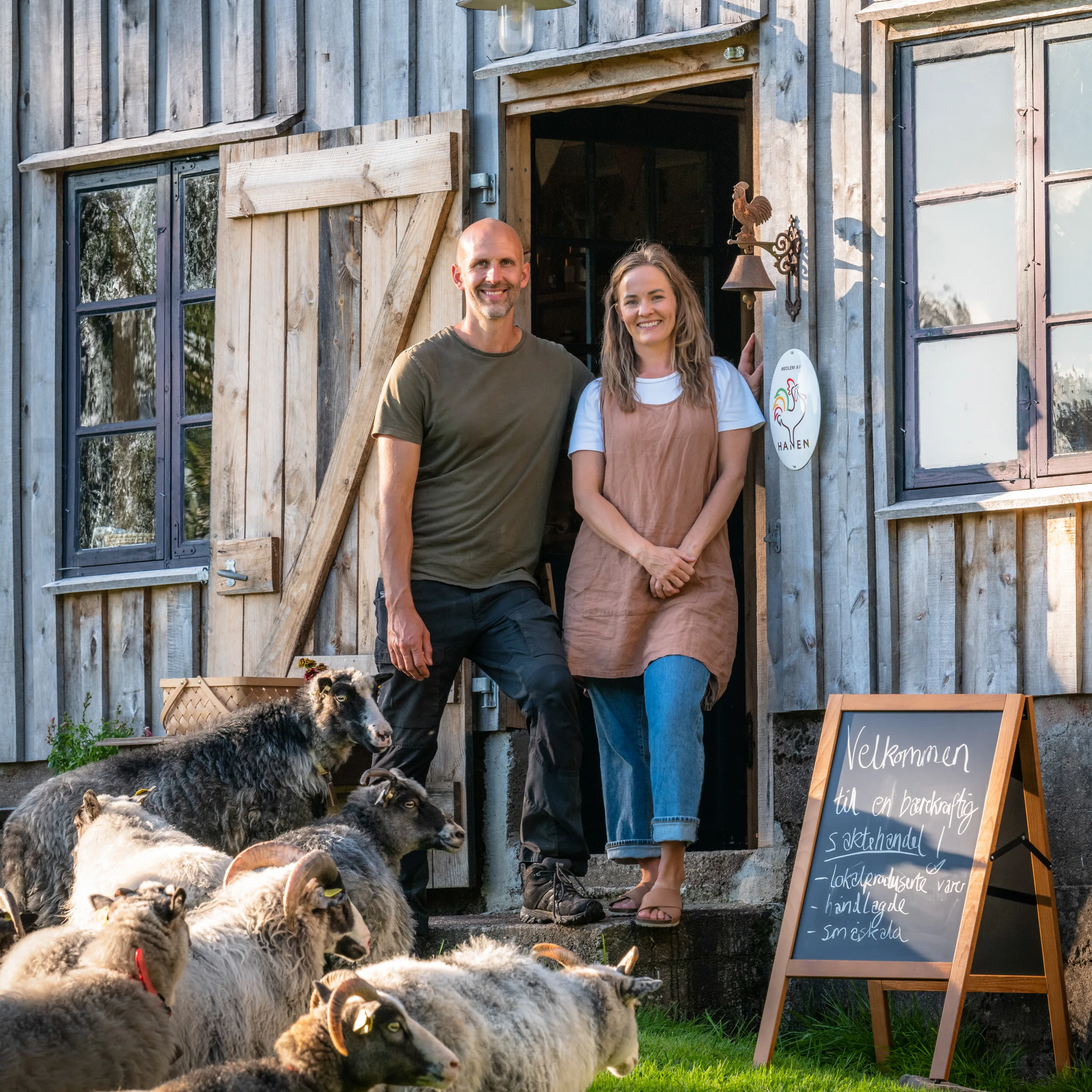
“We don’t want to live the way people did a hundred years ago,” says Nina.
“But we are very fascinated by the knowledge they had about local materials, food, building methods, animals and landscape – and how well they made use of the resources around them.”
In brief
- Who
- Nina Opofte and Bjarne Tysse Høgelid
- Where
- Svindal Gård in Åpta, Herad, Farsund
- What
- Farming (regenerative agriculture), a handmade skincare range (Sakte Hudpleie), farm shop, workshops and events
Two kilometres to the nearest neighbour
Svindal gård is an idyllic little smallholding in the hamlet of Åpta in Farsund. There is a white-painted farmhouse, a barn with a farm shop and a new timber frame building that makes it possible to hold courses, gatherings, celebrations and workshops. And it is a long way to the nearest neighbour. Two kilometres, in fact. (Though it must be said that Farsund town is not far – less than half an hour by car.)
There are many animals on the farm, and they all have a job to do. The wild sheep graze outside all year and look after the beautiful cultural landscape. As well as producing wonderful meat and wool, of course. Hens and Muscovy ducks strut around the farmyard and lay eggs in abundance. The bees provide both honey and pollination, and the dog is the caretaker who keeps an eye on the others.
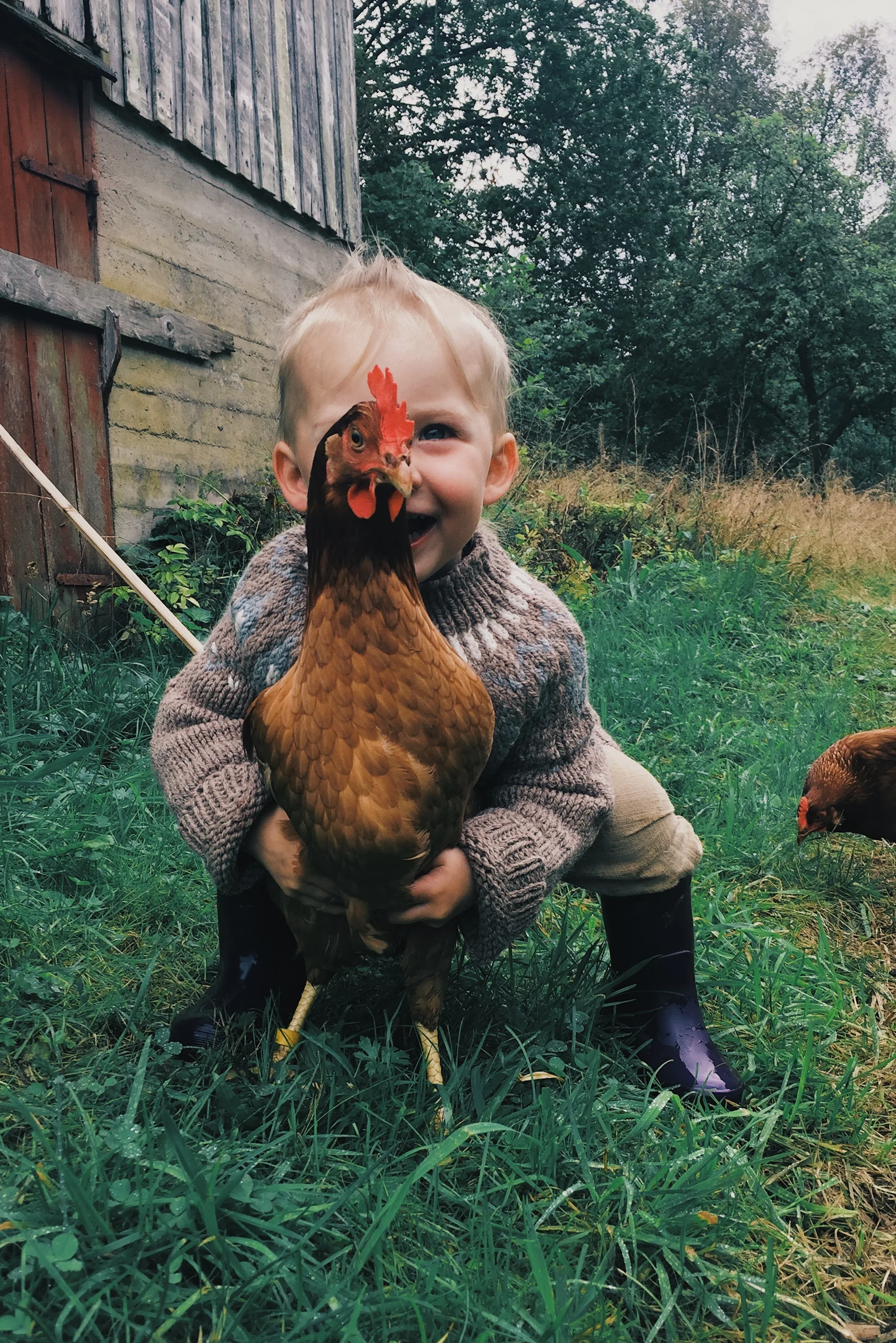
The contrast with their former everyday life in the city of Bergen is striking. But in 2017, when her parents wanted to sell the farm, they took the chance, quit their jobs, sold most of what they had and jumped in.
“It was probably a mix of longing and a wish to live a little differently. We wanted to be closer to nature, have more space and more freedom to shape our everyday lives ourselves. Not because we had a ready-made plan to become farmers or build a business, but because we wanted a life where we could use our hands more, keep animals and be more closely tied to the place we lived,” says Nina.
Old knowledge, worth its weight in gold
Svindal gård has grown slowly but surely since Nina and Bjarne took over. It has meant a lot of hard work, but they have no regrets. All along they have cared about living in tune with nature, the seasons and the resources around them. In that respect, old knowledge is a real treasure chest.
“When you start looking into old methods, you often discover how well thought through they are. They were developed over generations of experience with the same landscape and the same resources,” says Nina.
“For us it is very much about seeing which resources are already here and trying to use them well, instead of forcing the farm to be something it isn’t.”
The sheep on the farm are a good example of working with nature. The breed, old Norwegian sheep, also called ursau, are masters at grazing vegetation people cannot eat. Grass, heather and herbs go down by the mouthful and are turned into the most delicious meat. At the same time the sheep keep the cultural landscape open and attractive. And as a lovely bonus – they live their best sheep life, outdoors all year round.
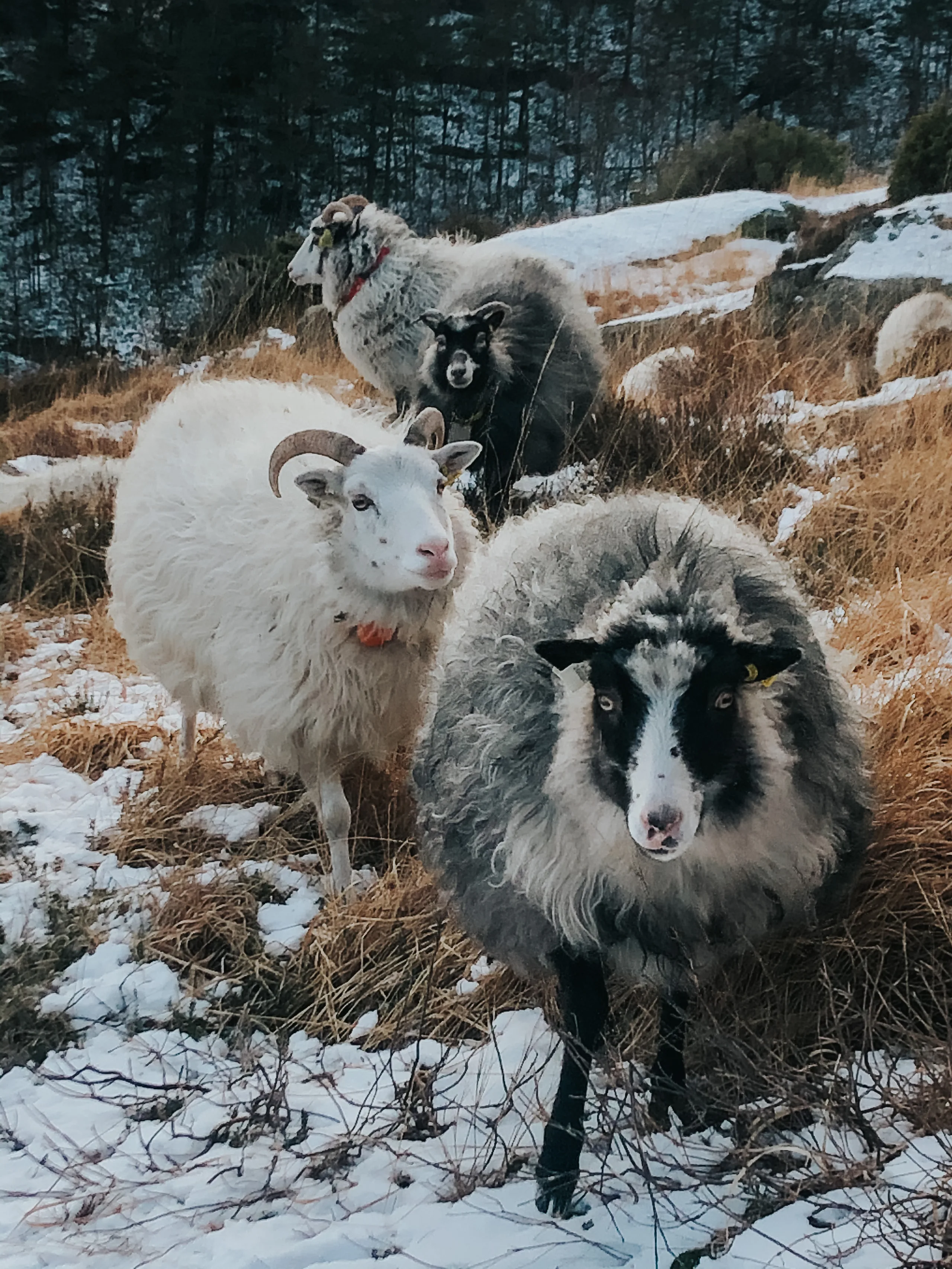
For Nina and Bjarne, a life in tune with nature also means looking back. They want to preserve the knowledge earlier generations gathered, and put to use what they knew about keeping animals, building and plants.
“Our timber frame building is one example of that, and the juniper cladding Bjarne has been working on is another. The same goes for much of what I do with tallow, herbs and skincare,” says Nina.
“It would be a shame if this kind of knowledge just disappeared. We don’t need to copy the past, but we can certainly take some of it with us.”
Nina Opofte, Svindal Gård
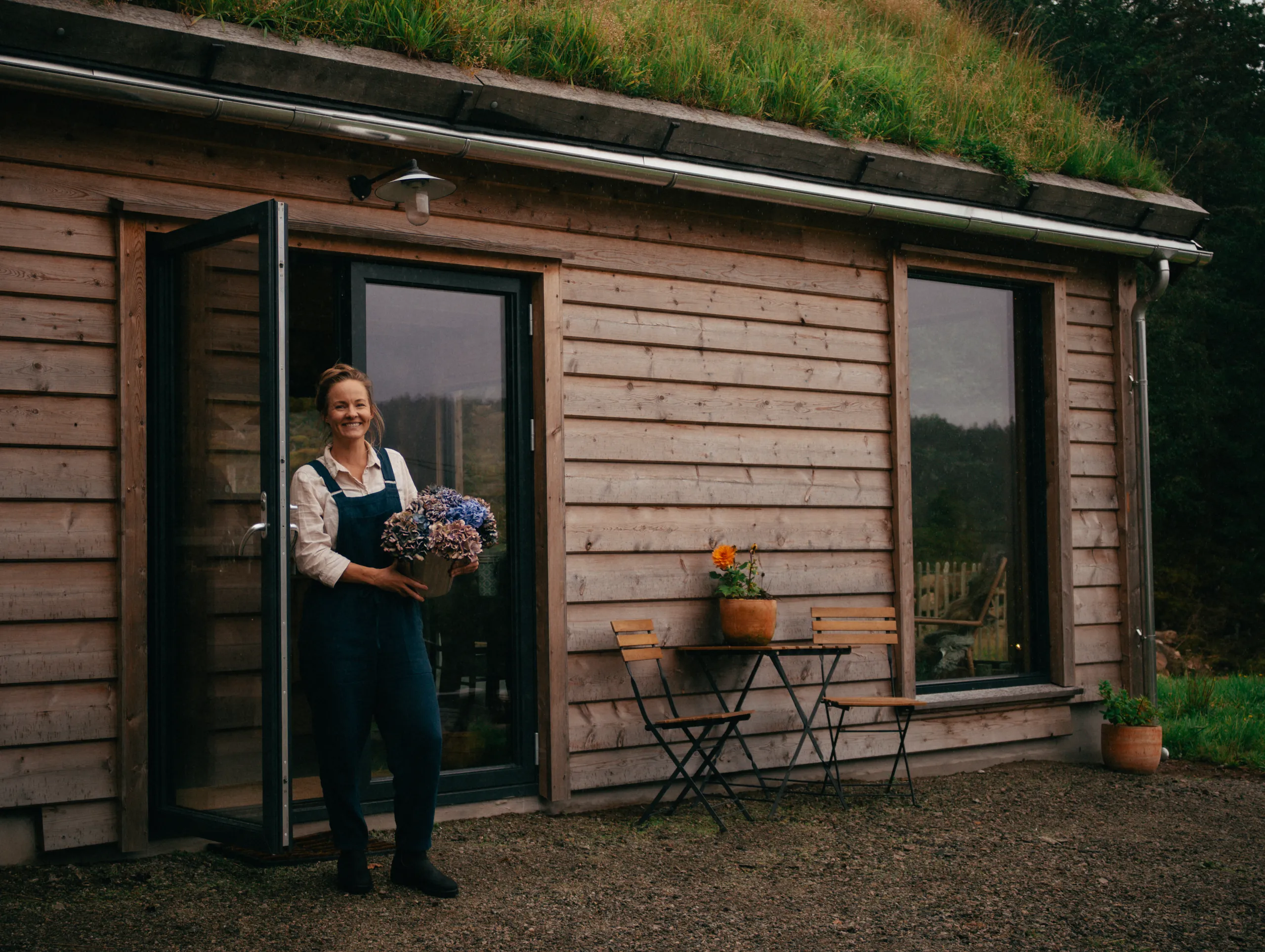
Traditional building
Grindbygg
- A timber frame building: a timber structure in which frames set across the length of the house carry the load.
- The beams lock into each other to stand firm, and no nails or screws are needed.
- Examples are known from as early as the 1500s, but the system is probably older and may go back to the Viking Age.
- The construction is solid, flexible and economical with materials.
Brakjekledning
- A type of airy cladding made of juniper.
- Juniper branches are threaded onto horizontal poles between the posts of the barn wall.
- The dense branches keep the rain out while still letting the building breathe (which matters in a barn where hay or wood is drying).
Sources (in Norwegian): Store norske leksikon: grindehus · Store norske leksikon: grind · Wikipedia: brakjekledning
From tallow to a full-time job
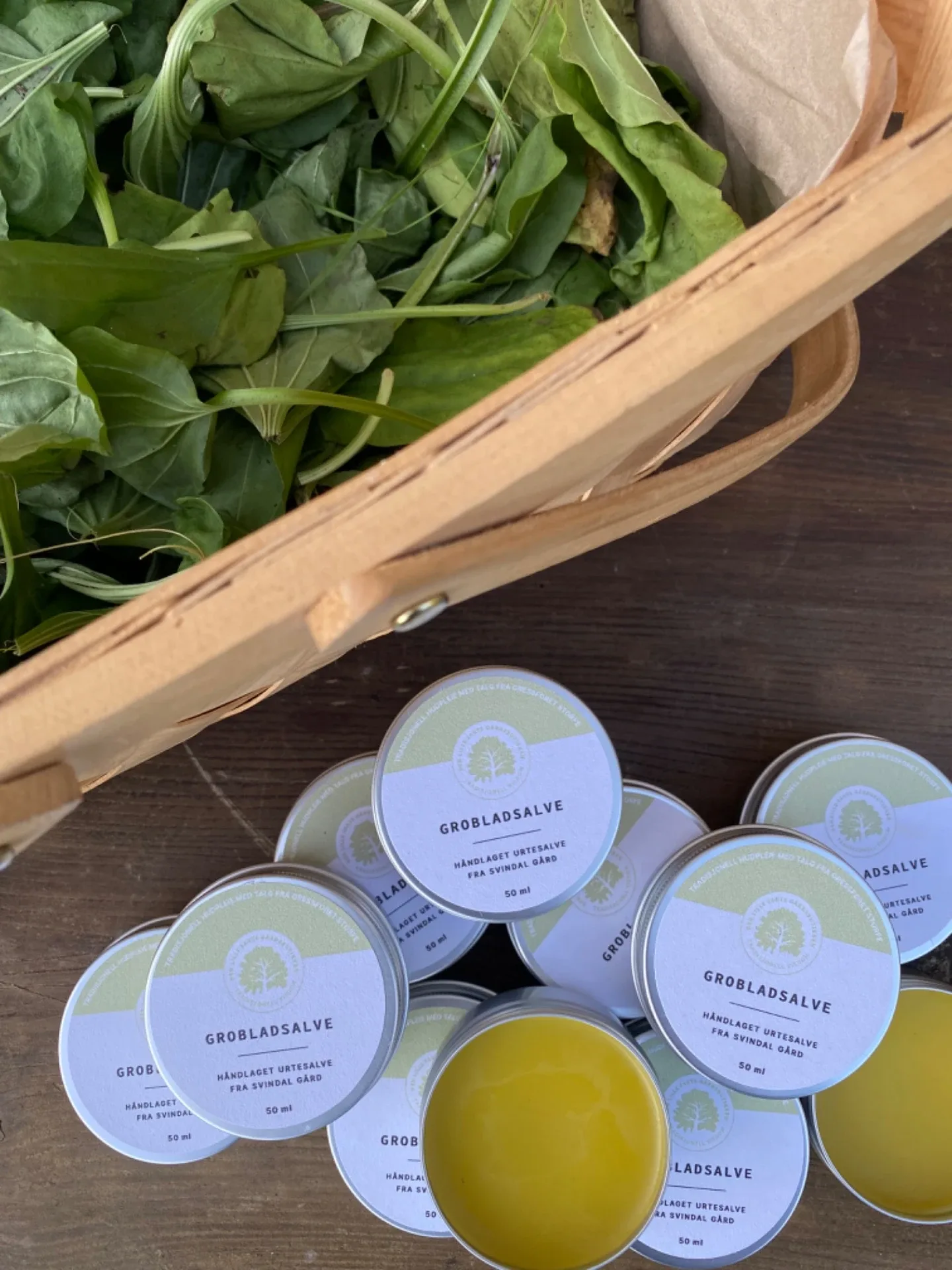
Skin cream with blue tansy, a shampoo bar with juniper and pine, facial soap with pink clay or face cream with lavender and geranium. That is just part of the skincare range Nina has developed and makes by hand. At its heart are tallow, old traditions and natural ingredients.
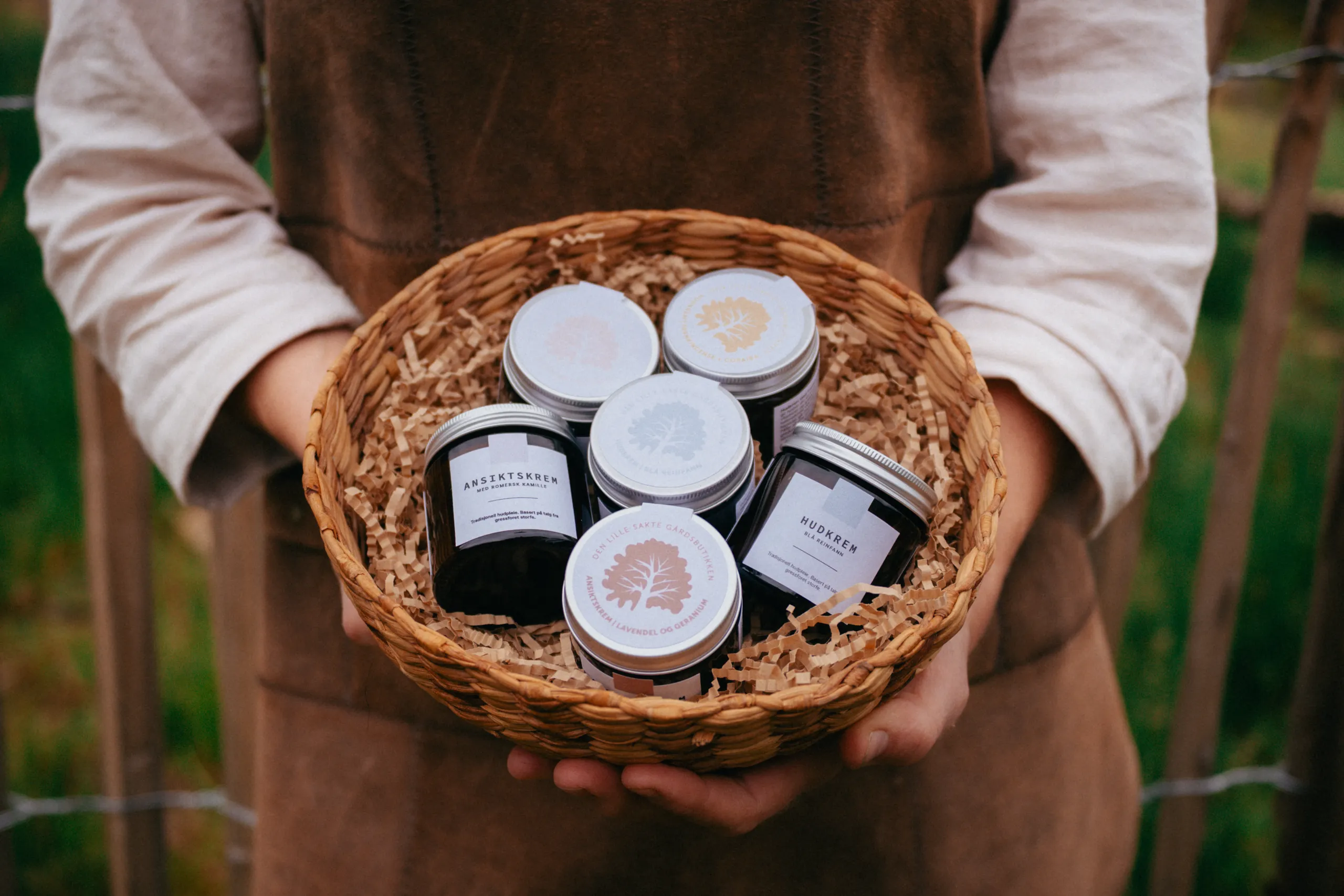
“Sakte Hudpleie was really quite a natural choice after many years of strong interest in traditional food and nutrition. Over time it became very clear that what we put on our skin matters just as much as what we eat, and so I also became more interested in simple, traditional ingredients for skincare,” says Nina.
“Tallow gradually became a completely natural part of that. I was very inspired by the stories of how tallow had been used on this family farm and on other farms in the past – as a valuable raw material that people naturally took care of and used.”
Nina found that this really worked. In an entirely natural way, without all sorts of additives with long chemical names.
“When I started using tallow in skincare myself, I also saw very good results on my own skin. To me it was fairly obvious that this was a raw material people were going to rediscover. From there it actually went quite quickly. I started developing different products and combining the tallow with herbs and oils, and gradually a whole product range grew.”
Today handmade creams, salves, soaps and other products are made on the farm. The interest in tallow and good ingredients has become Nina’s full-time job. And Sakte Hudpleie, “slow skincare”, will never be rushed.
“Even though the business has grown a lot since the start, it is important to me to preserve the craft and keep making the products in small batches,” Nina says firmly.
Hard work, rewarding results
On a farm there is always something that should have been done. Always. It is not necessarily a calm and leisurely life, but the days are varied. For Nina, one working day might be spent making skincare, the next on sheep, hay meadows, courses, the farm shop or a building project. The family knows they have to adapt to nature, not the other way round.
“I think it is about accepting that we are not in control of everything. The seasons, the weather, the growth and the animals set the terms. You learn to observe more and adapt to what is actually happening around you,” she says.
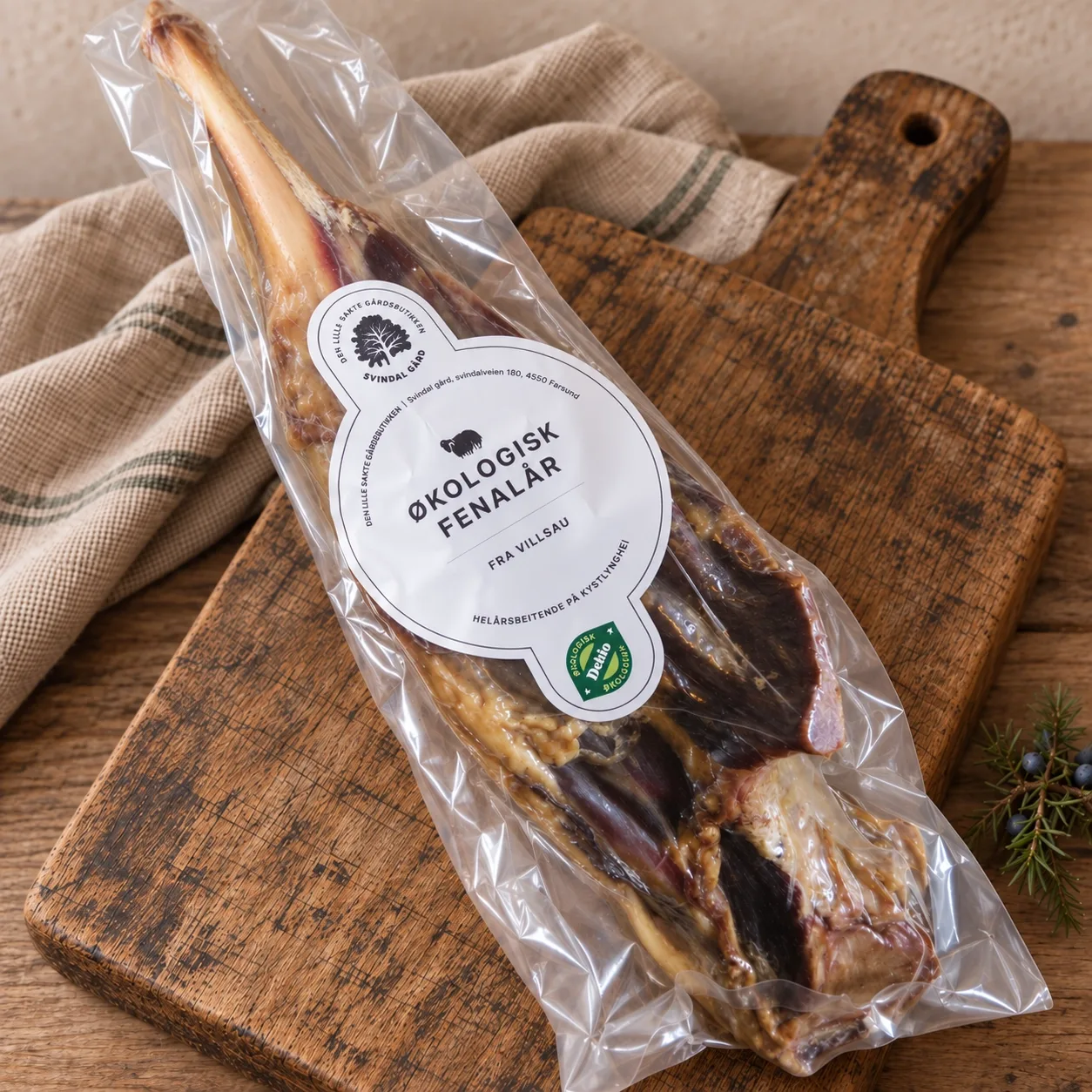
Old knowledge has been brought out and polished at Svindal gård. Here it is put to use in new ways: knowledge of herbs and tallow becomes a skincare range, old building methods become places where people gather for events, and in the online shop you can order organic cured leg of lamb. It is all steeped in a deep respect for the nature they live in.
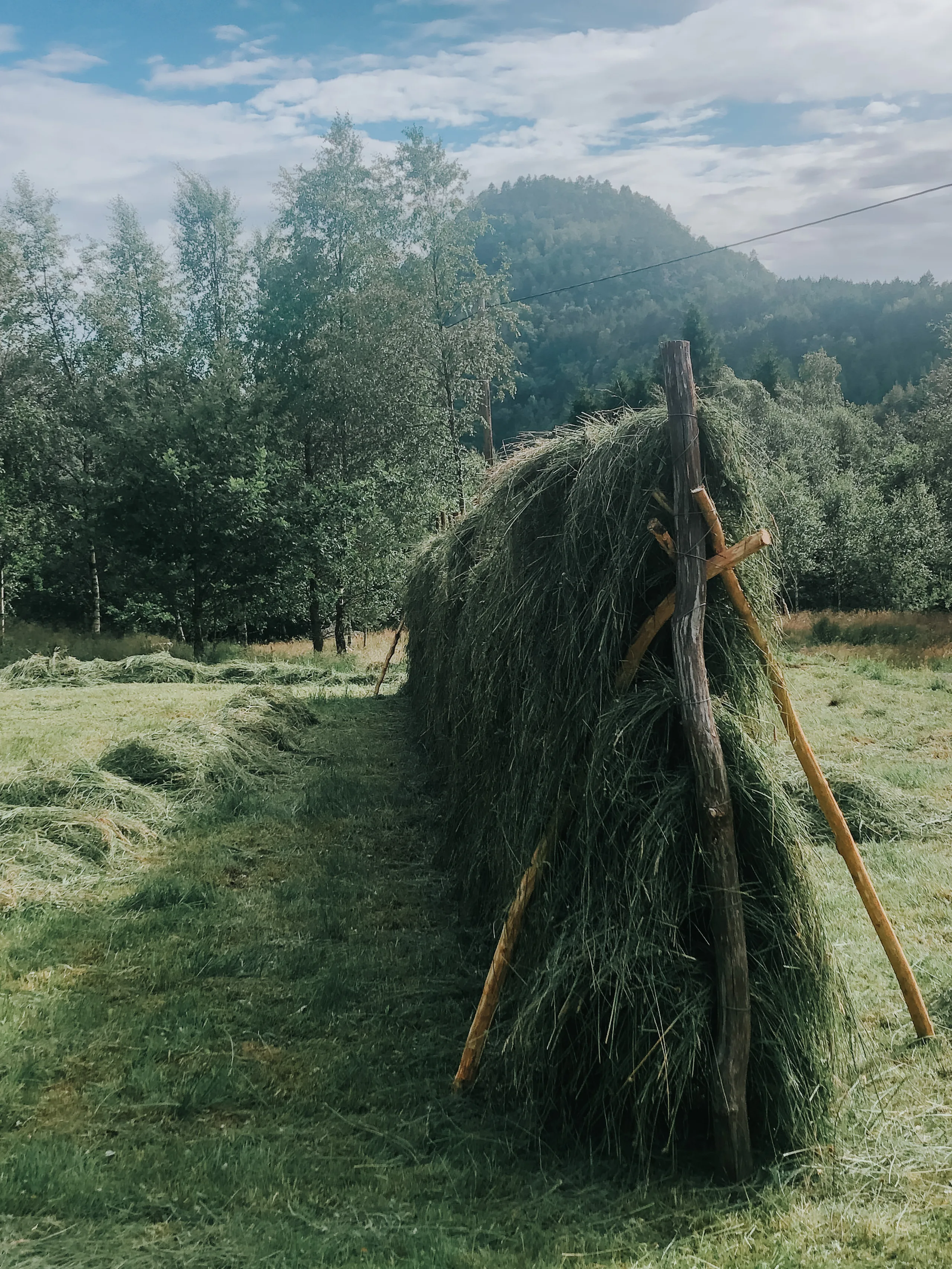
“Nature isn’t something we have to plan a trip to. It is part of everyday life all the time, through the farming and otherwise. When you live both in and off nature, you also develop a different relationship with it. It isn’t just a view, but something you feel responsible for looking after,” Nina concludes.
Sources
01Svindal Gårdsvindalgard.com ↗02Grindehus – Store norske leksikon (Norwegian)snl.no ↗03Trehuskonstruksjon – Store norske leksikon (Norwegian)snl.no ↗04Grind (arkitektur) – Store norske leksikon (Norwegian)snl.no ↗05Brakjekledning – Wikipedia (Norwegian)no.wikipedia.org ↗06Kledning – Wikipedia (Norwegian)no.wikipedia.org ↗07Einer – Wikipedia (Norwegian)no.wikipedia.org ↗