
The Snartemo sword– gold, unknown rituals and archaeologists who risked their lives
It tells a powerful story, the Snartemo sword. The ancestors of the Vikings put an enormous amount of work and impressive skill into it when the sword was forged almost 1,600 years ago. Since then it has been dug up by farmers, saved by a professor who put his own life on the line to protect it, and made the subject of study by experts from all over the world.
When it was laid in the grave of an unknown chieftain in Hægebostad around the year 530, the sword was already 100 years old. Century after century, the sword lay with its owner. But in the end it was found, entirely by chance.
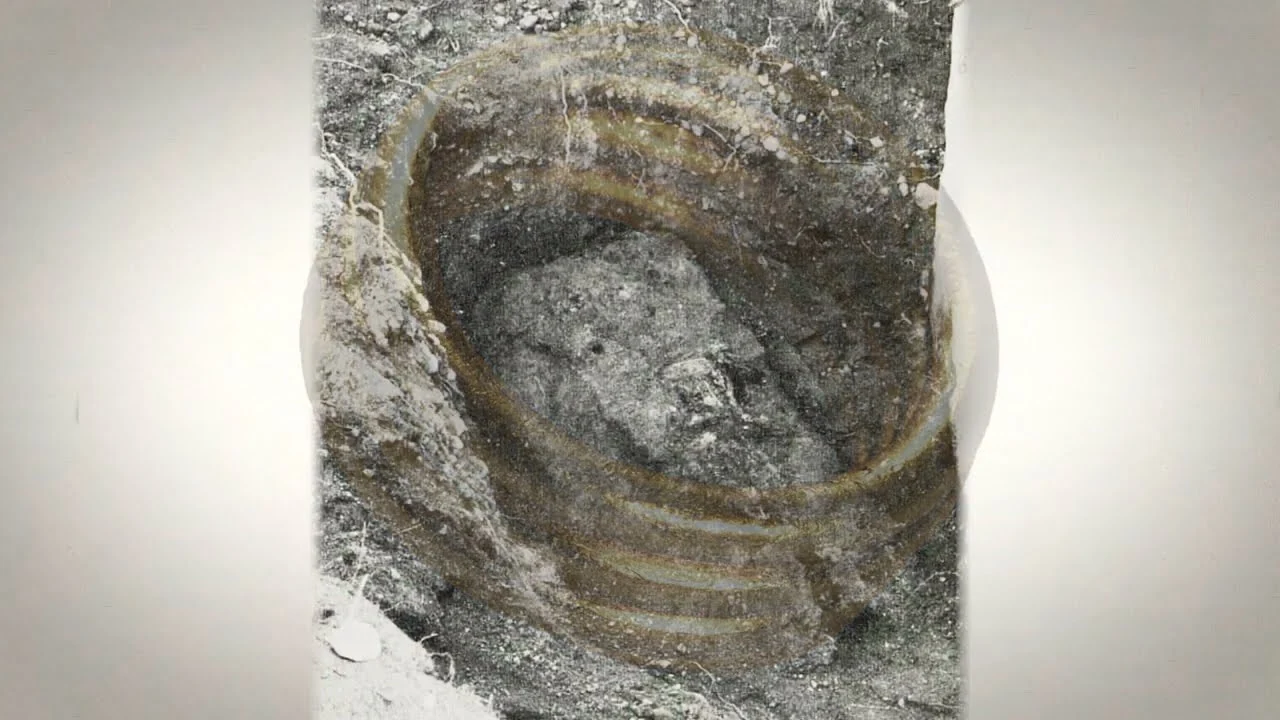
It was an autumn day in 1933, and two brothers, Richard and Olav Kjellingland, had set about the heavy task of breaking new farmland. With horse and plough the work went quickly, until the plough got stuck on a huge slab of stone.
Richard thought about blasting it away with dynamite, but first he put an iron bar under the stone. It turned out to be hollow underneath, and since it was not the first grave found in the area, the brothers realised that it might be a grave.
And so it was.
A genuine high-status grave.

A little boy named Trygve Naglestad was sent down into the grave to bring up the sword, which lay there glittering.
But that was not all the chieftain had been buried with. He lay on a bearskin in fine clothes, surrounded by a complete set of weapons, tools, rare patterned textiles, bear claws, a gold ring, a Roman glass beaker and much, much more.
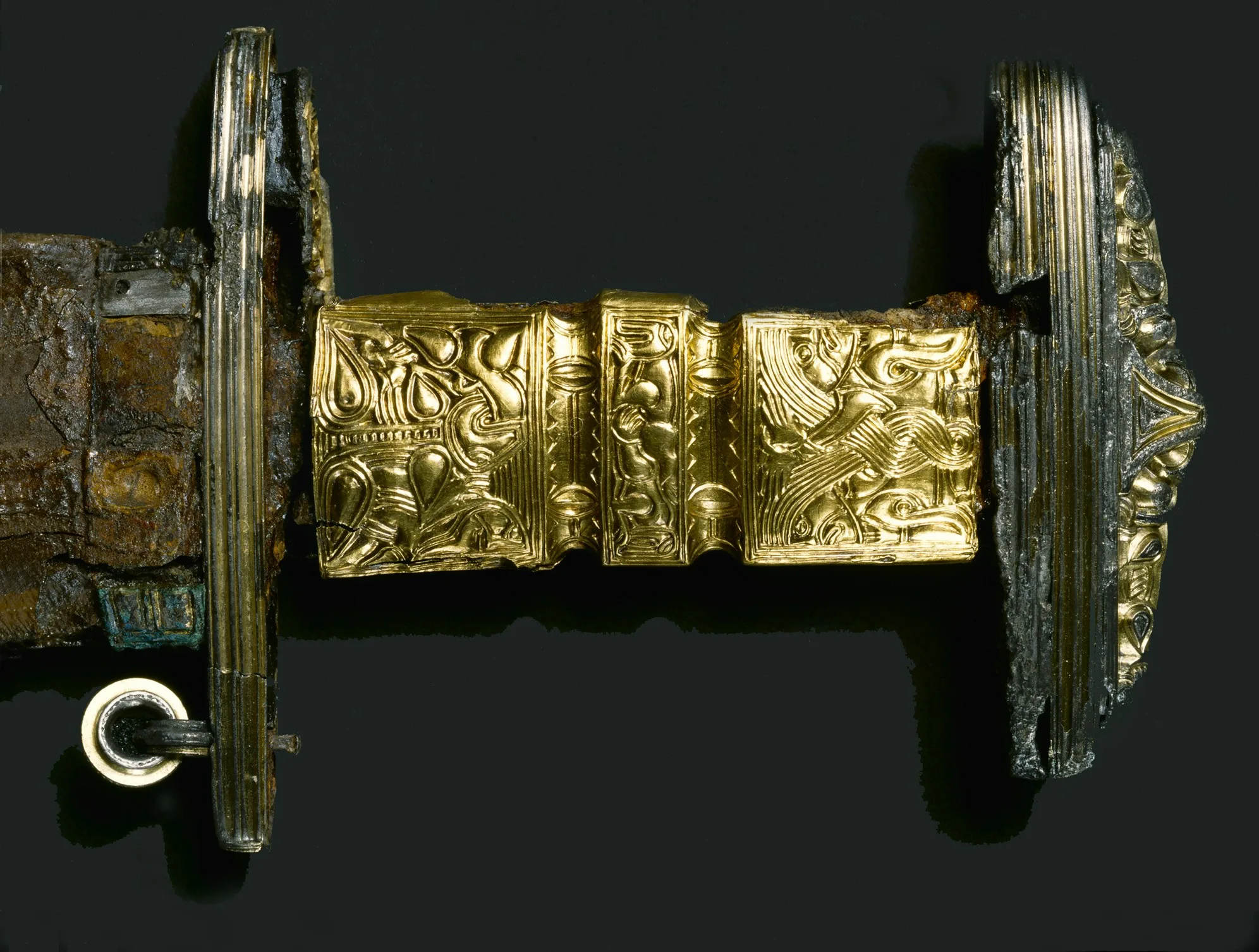
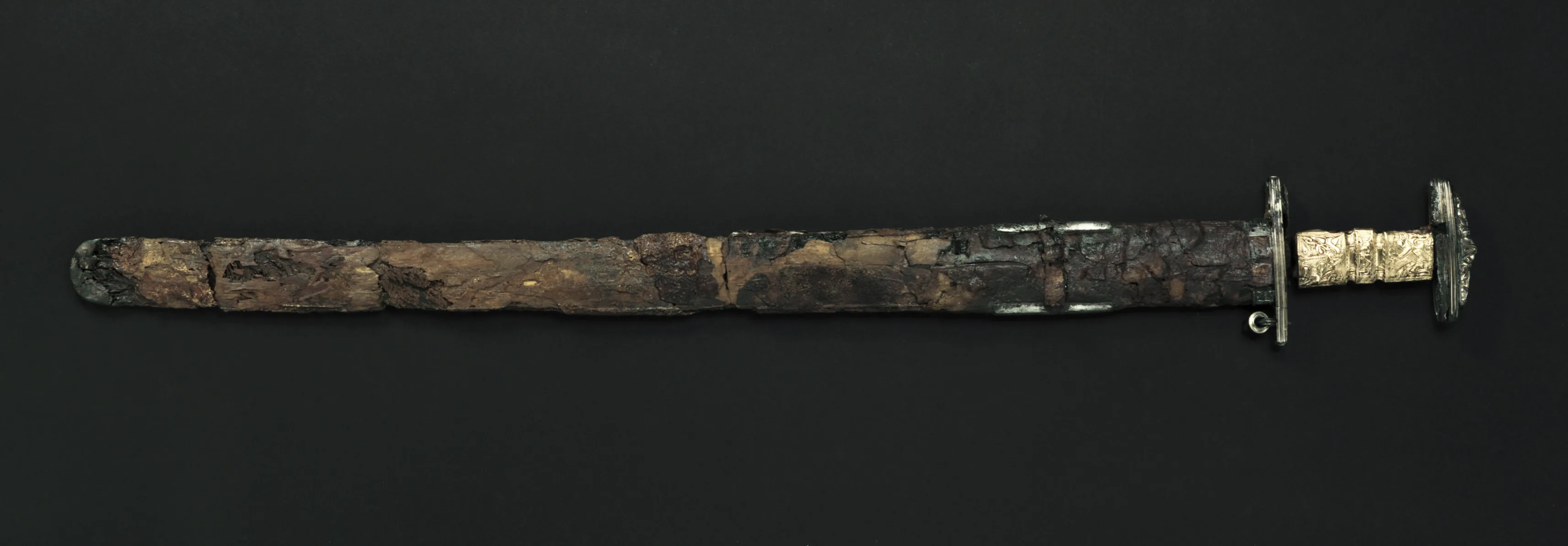
And then the sword. Decorated gold plates and gilded silver, figures from the mythology of Odin and a blade that was pattern-welded.
“It is quite simply incredibly advanced to make something like this.”
“Many people tend to focus on the gold hilt, but the pattern-welded blade is just as important,” says Katja Regevik, head of department at Tingvatn fornminnepark.
“This was not an ordinary fighting sword, you see. The Snartemo sword was most likely a ritual sword that belonged to a chieftain.”
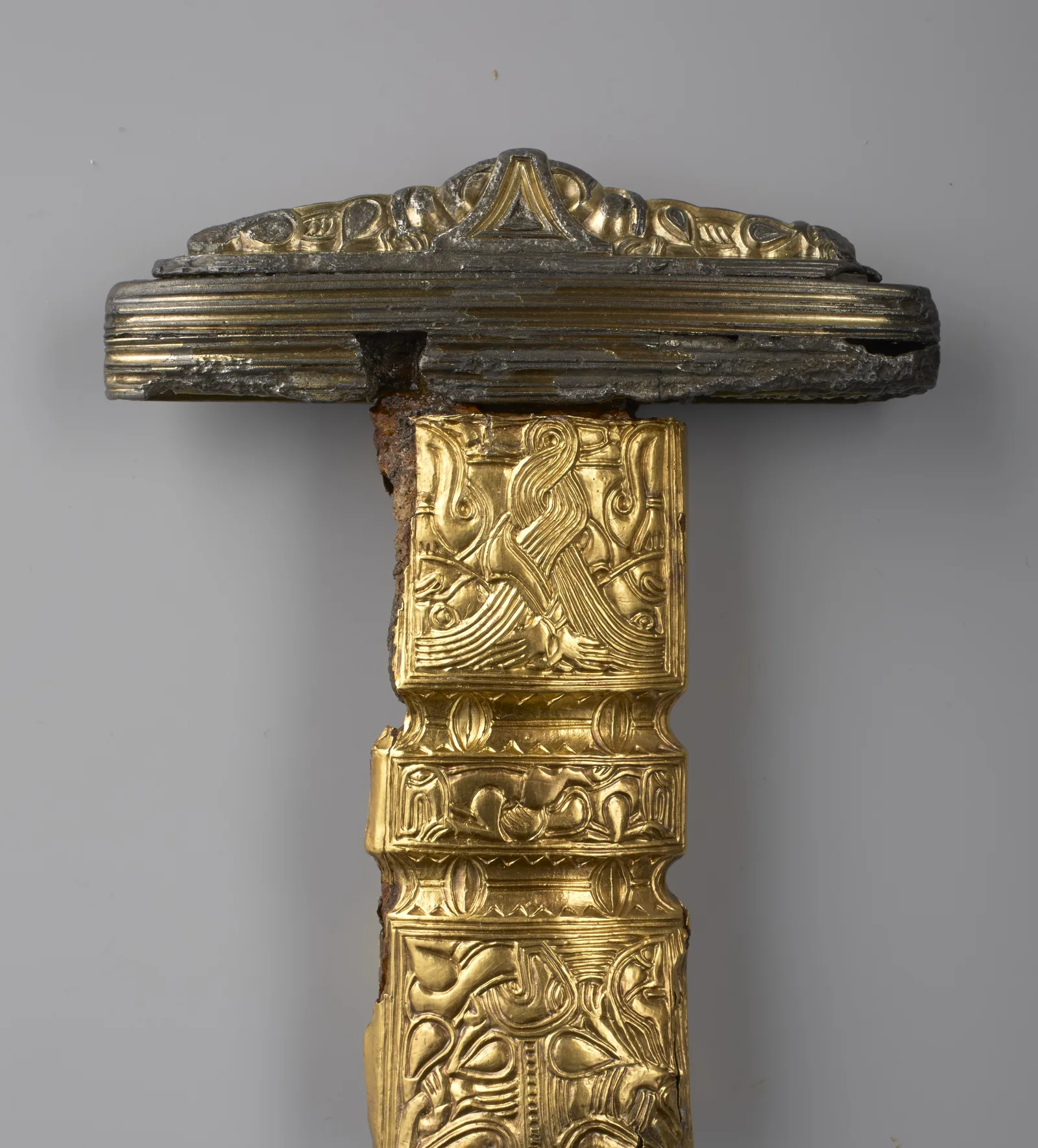
“The sword showed who held the power and had great symbolic value. The sword may well have had its own name,” Regevik explains.
The brothers on the farm quickly understood that this find was truly extraordinary. They covered the grave and contacted the University of Oslo, which soon arrived in Hægebostad with experts.
The news spread like wildfire, and curious onlookers flocked to Snartemo. In the end the whole area had to be fenced off with barbed wire.
The Snartemo pattern
The grave discovered at Snartemo also held some wildly intricate woven bands. The patterns are so complex that modern weavers barely stand a chance.
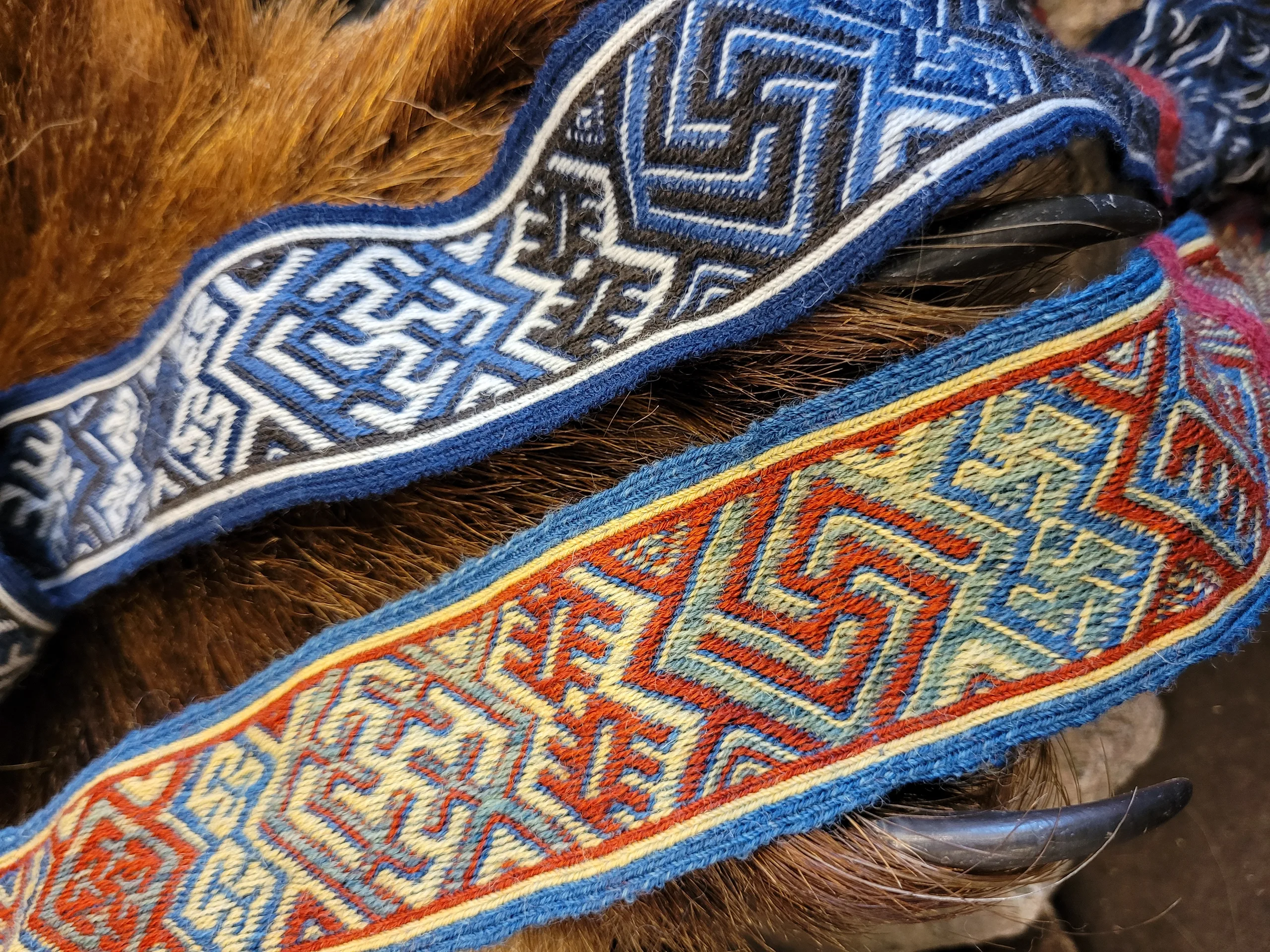
Tablet weaving
56
different tablets were used to weave the bands.
With plant-dyed woollen thread, the bands form geometric figures of various kinds. Among them is the swastika, which at the time had nothing whatsoever to do with Nazism; it was the sun sign and a symbol of good fortune.
The Snartemo bands are known far beyond Norway’s borders because of the advanced weaving technique used.
The fight for the sword
The Snartemo find attracted international attention, and the sword and the collection were soon moved to the Museum of Cultural History in Oslo. (It is still there.) But tensions were rising in Europe, and some people were willing to go a long way to get their hands on the Norwegian national treasure.
“During the Second World War, the University Museum of National Antiquities in Oslo received demands from high-ranking members of Nasjonal Samling to hand over Norwegian antiquities. Among them the Snartemo sword. Today we can thank Professor Anton Wilhelm Brøgger, the museum’s director, and his colleague Sigurd Grieg, among others, for the fact that the material is still in Norwegian hands,” says Katja.
“The occupying power tried to get hold of the antiquities, especially the sword, so that it could use these important cultural treasures to promote and bolster its ideology. In 1936 the material had been shown at an international congress where German archaeologists were natural participants. German archaeologists therefore knew the Snartemo finds well; they were the big news that year. But even though the material was attractive both to Nasjonal Samling and to the German occupying power, the archaeologists held back and resisted. With their determination and willingness to sacrifice themselves, they managed to keep the material, which is counted among the objects of national importance.”
The story kept alive at Snartemo
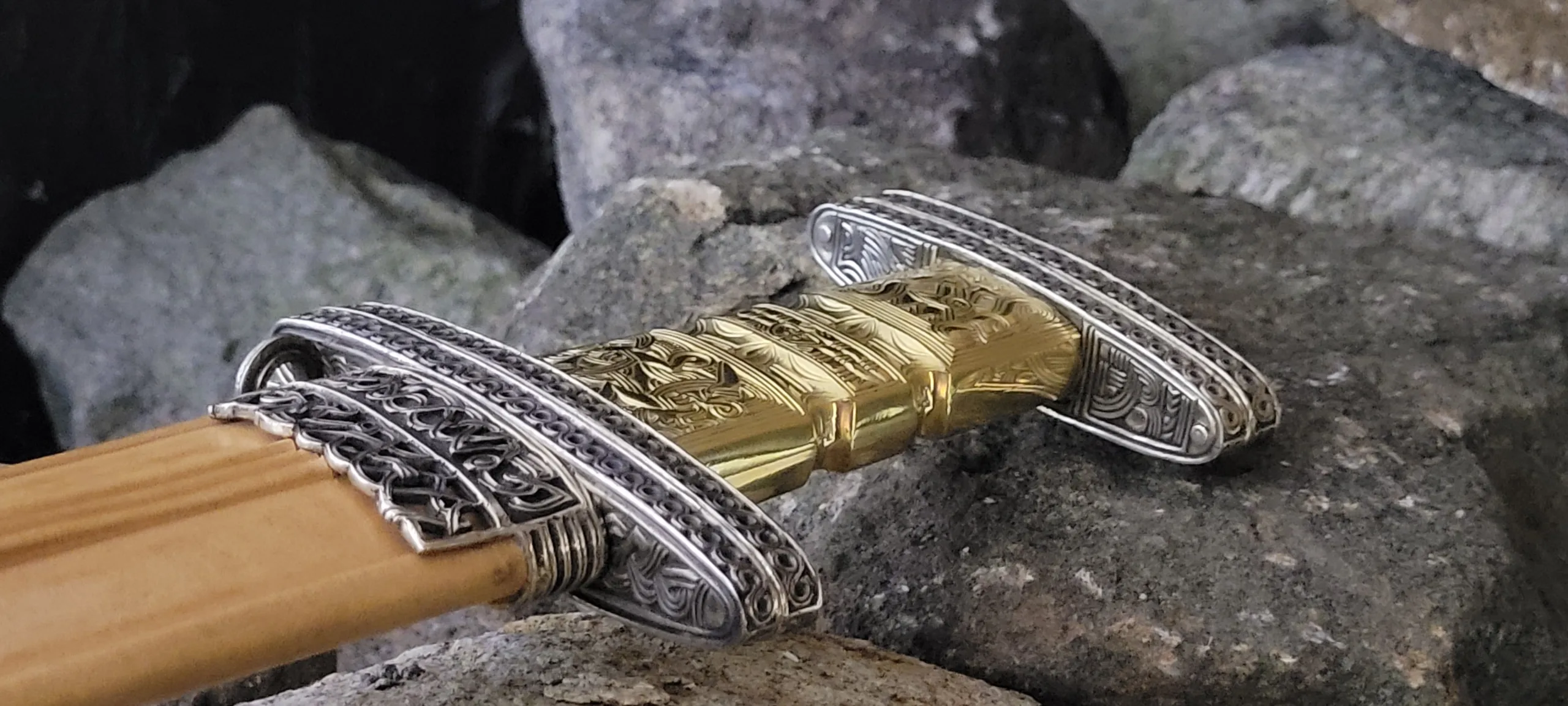
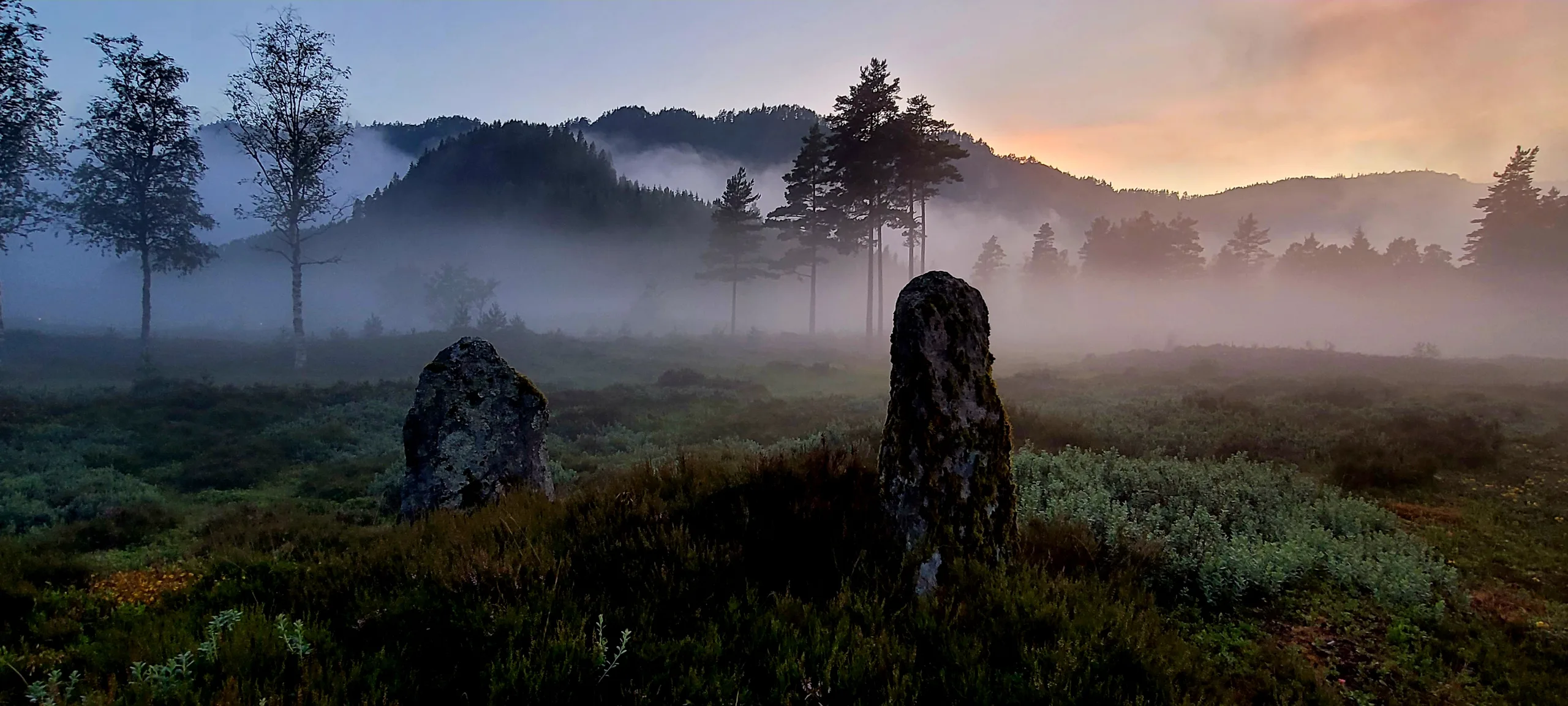
Although the Snartemo sword is now kept at the Museum of Cultural History in Oslo, its story is far from gone at Snartemo and in Hægebostad municipality. A few hundred metres from the find site stands a large replica of the sword, and on the find site itself stands the memorial stone.
A few kilometres away lies Tingvatn fornminnepark, an open-air heritage park where the story of the Iron Age, the Migration Period and the Snartemo find is still told, among other things through a carefully made replica of the sword.
Almost 1,600 years ago, the sword was laid in the grave of a powerful man whose name we do not know. Since then it has survived centuries underground, a chance discovery, a world war and the Nazis’ attempts to get hold of it. Now it is one of Norway’s best-known archaeological treasures.
And probably the closest we will come to a direct connection with the people who lived at Snartemo one and a half thousand years ago.
Sources
- Historien om oppdagelsen av Snartemo V sverdet og graven – Tingvatn fornminnepark – Vest-Agder-museet
- Snartemosverdet – Wikipedia
- Snartemosverdet – Skatten nazistene aldri fikk – Historisk museum
- Premiere på dokumentarfilm om Snartemosverdet – NRK Sørlandet
- Smiing og smed. Perspektiv på smihåndverk (Vikinger i Vestfold)
- Snartemo V – Liljekonvall Tablet Weaving